
The BLAINE Effect
Why working with an architect doesn’t just protect resale value—it redefines it
Many—if not most—of our clients care deeply about resale value. They want to make smart decisions. They don’t want to over-invest. And they often come to us with one concern:
“We don’t want to spend more on our remodel than the neighborhood is worth.”
This instinct is understandable—and fundamentally flawed, and here’s why.
Most homeowners measure investment against today’s market value. But you are not selling your home today. You’re selling it five, ten, or twenty years from now—into a market that doesn’t yet exist.
And more importantly: a BLAINE home doesn’t follow the market. It resets the market value. That’s what we call The BLAINE Effect.
The value of thoughtful architecture depends on clarity of vision and emotional connection.
That’s how precedent is made.
_______________________________________________________________________________
PRECEDENT 1: THE AA-01
From $690/sf to $1,300/sf
After a $200K BLAINE renovation, the Eichler AA-01 sold for $1,300/sf—nearly $500,000 more than any other home in the neighborhood, and more than double the purchase price. There were 13 offers. and multiple offers over $1.3M. No home in this neighborhood had ever sold for over $820K before this.
Why? Because it wasn’t just another renovation.
This house became an icon.
Go on, Google “Eichler House” and look at the images. We’ll wait. Did this photo come up?
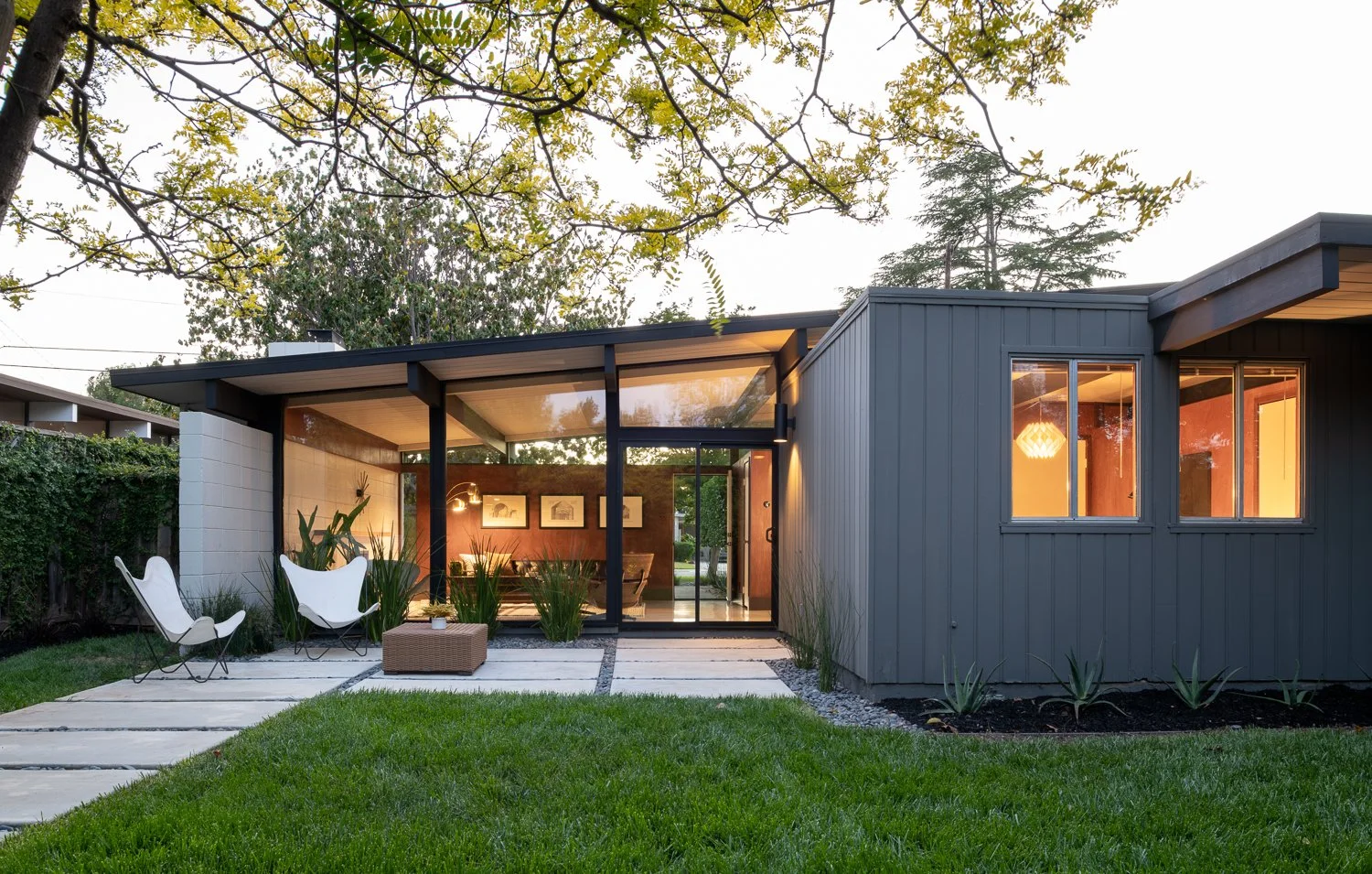
The home was widely published, shared, and re-shared. It became a reference point. A benchmark. A precedent. Now it’s iconic.
AA-01 didn’t exceed the market. It reset it.
That is The BLAINE Effect.
_____________________________________________________________________________________________________
PRECEDENT 2: THE RED EICHLER
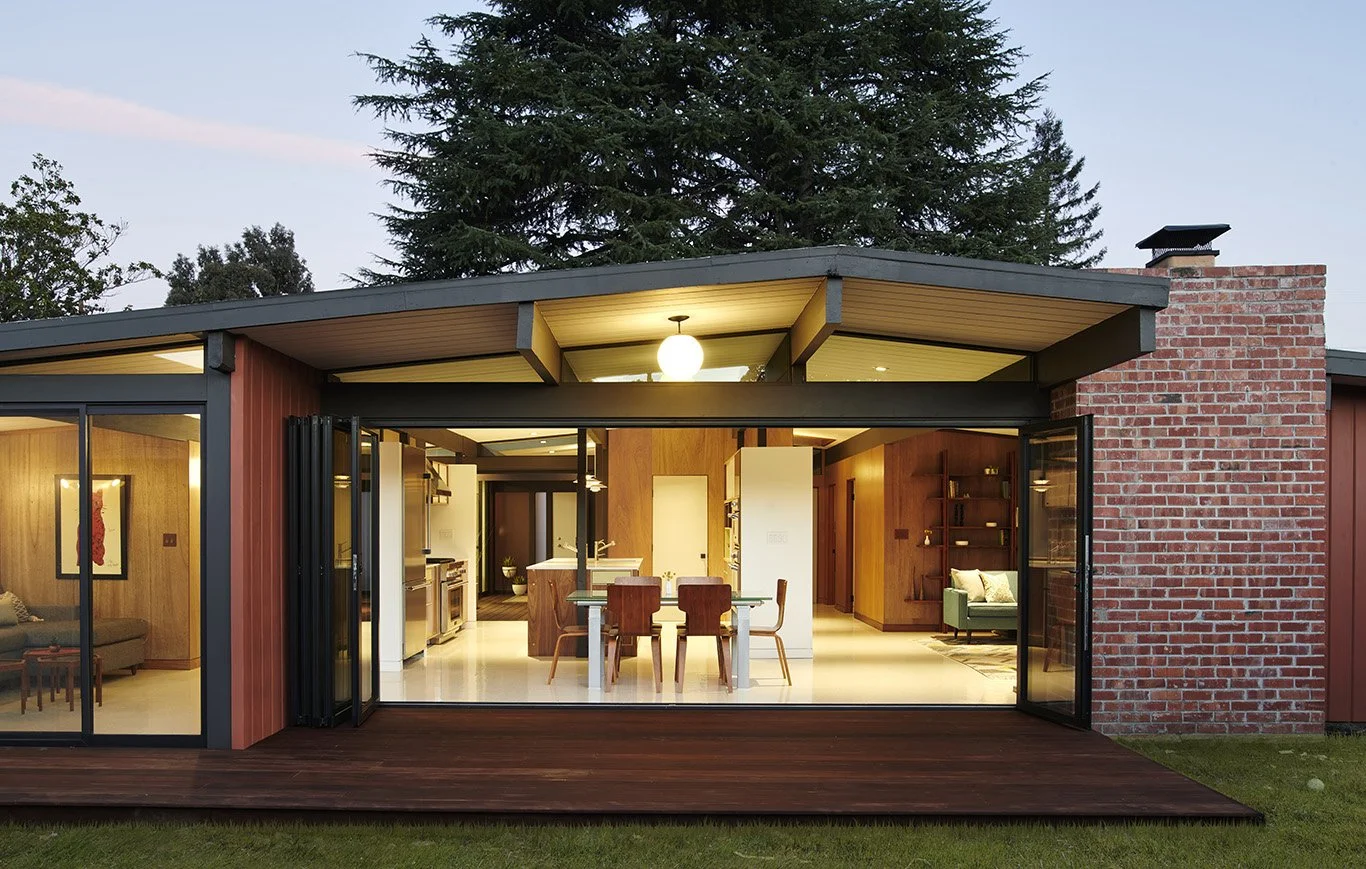
From $475/sf to $1,095/sf
Purchased at: $475/sf
Renovation investment: $650,000
Previous neighborhood record: $1.3M
After renovation, this BLAINE-designed home sold for $1,095/sf and became the first $2M sale in the neighborhood—nearly doubling the prior record. Again: not incremental appreciation, but a categorical leap.
Why? Because after renovation, the home became a design object—one that buyers coveted, not just a home they liked. It stood alone in the market.
That is the BLAINE Effect. This home will be worth more than other Eichler homes, forever. Because it’s an icon.
_____________________________________________________________________________________________________
PRECEDENT 3: GLADYS
(PHOTOS COMING SOON)
From $655/sf to $1,230/sf
Purchased at: $655/sf, invested $1.1M by adding a second level.
Became the first $3M sale in the neighborhood—nearly half a million dollars over the previous record.
No gimmicks. Just disciplined architecture, professional interior design by my friend and licensed interior designer MMID, executed with precision. Buyers connected emotionally with this home. There is something about it that just stands out. It feels different. It feels like a home, right from the start. Why? The BLAINE Effect.
_____________________________________________________________________________________________________
The common thread: Trust the architect.
There is a reason these homes performed the way they did when they sole. They were built with original BLAINE vision.
The clients trusted the process
The contractors followed the details
When unexpected conditions arose on site, the contractors turned to the architect—not shortcuts
Architecture is a system. When the system is respected, the result is clarity—and clarity is value.
_____________________________________________________________________________________________________
Architecture as market leadership
Great architecture does more than age well. It becomes a reference point.
Buyers don’t ask, “How does this compare to the others?”
They ask, “Why doesn’t anything else look like this?”
That difference is where value lives. That difference is The BLAINE Effect. Considering a renovation or custom home? If resale value matters to you—and it should—the goal isn’t to avoid over-investing. The goal is to design a home that future buyers can’t replace.
That’s how markets are made.
And that’s what we do.